
Imagine, as John Lennon said, if the country was managed like a company. There would be a chairman/CEO the prime minister, a board of directors the Cabinet perhaps a set of shareholders the people, regulators the Parliament, employees the bureaucrats, and so on. The key difference is that for a government, the people are both the customers as well as the shareholders. A government works primarily for the people (customers), and is of the people (shareholders).
Of course, managing a government, any government, is more complex than running a company. A companys mandate is pretty straightforward create value for all its stakeholders and in case of conflict among interests of the stakeholders, the shareholders as the owners of the business get precedence. Therefore, value creation in financial terms tends to be pre-eminent among objectives. In a government, there are too many competing interests, too many shareholders in the case of India, 1.2 billion of them, and prioritising the interests of so many often leads to some falling right to the bottom of the heap.
Often this happens to those who have no voice, no influence, no visibility in the mainstream and, often, even no vote. It is the job of the government to identify these dispossessed and give them succour. Particularly in this regard, a government is very different from a corporation.
Now, lets come to the crux of the issue. Despite all the differences, why cant a government be run more like a company with similar management principles? For example, when a new government comes in, we do not really know its agenda and policies with any degree of specificity. The best we have is a wishful, catch-all manifesto that almost nobody reads before or after the elections. Ministries do not have clear priorities and action plans other than some very basic and overarching ones.
But none of the ministries has a well-defined action plan for a five-year period. I have not seen a minister putting out within, say, 100 days a clear set of objectives, a five-year roadmap, a statement of the basic challenges and issues, and how the minister intends to resolve them and move forward. And what support and cooperation he or she needs from fellow ministries and the PM. If such a plan were to exist, there should be regular monitoring of these targets with report cards on performance, and may be annual discussions on the priorities and targets themselves.
I cannot imagine that this is too much to ask for. It may be argued that when a new minister takes over, the person may be unfamiliar with the ministry but isnt that where our bureaucrats are supposed to come in? This sort of target-setting and monitoring mechanism should be part of each and every ministrys regular way of functioning. Based on his partys requirements and manifesto, a new minister should simply have to tweak the priorities and roadmap that already exist.
Surely, this cannot be that complicated? It just requires a mindset change by those in government to hold themselves accountable to a higher standard. The need for a roadmap needs to be driven by the prime minister, aggregated at the end of the 100 days, and a collective set for government as a whole needs to be put out. This can then be thoroughly discussed and debated, conflicts can be resolved, and then it becomes a transparent action plan with clear visibility for all stakeholders.
Similarly, the opposition parties need to offer their own roadmaps of governance over the same five years. As in the UK, there should be a shadow cabinet with shadow ministers for each area. This way, the enlightened voter/shareholder/customer will be in a position to do her own what-if analysis and, at the end of five years, have two competing visions to choose from.
Unfortunately, Indian politics and our governance machinery have become thoroughly degraded and corrupt over the years. To address the quality of governance, we need better clarity on governance objectives, and as voters, we need to actively monitor the performance of governing political parties against targets they should be compelled to set at the beginning of their terms targets that are clear, measurable and achievable. Much as we set Key Performance Indicators in the corporate sector.
Second, the problems of this country will not be addressed unless we have fundamental reform in the way our political parties are financed. Unless this happens, every political party, and politician, will use public office to finance their continued incumbency, and the bureaucratic machinery is unfortunately suborned in the process. Recent examples show the absolutely staggering amounts of money that can be made by corrupt politicians. Politics has, therefore, become the first refuge of those seeking a lucrative profession, rather than being a calling for those truly interested in public service.
Unfortunately, the issue of corruption has pervaded all aspects of Indian life and goes beyond politics. To combat this, we need to reduce the complexity of government and the many touch points it has with the people as the more points of interaction, the more is the scope for extraction. For example, we could set up a really independent Ethics Commission comprising apolitical persons whose integrity is absolutely above board. And we need to implement laws to punish the corrupt much more speedily.
By infusing some pretty basic management principles and ethics into our politics, we can create a better system of accountability and performance. This can help ensure that our political class put aside their personal aspirations for the gain of the hundreds of millions of hard-working and voiceless Indians who also happen to be the governments customers and shareholders.
Source: Economic Times
Read More
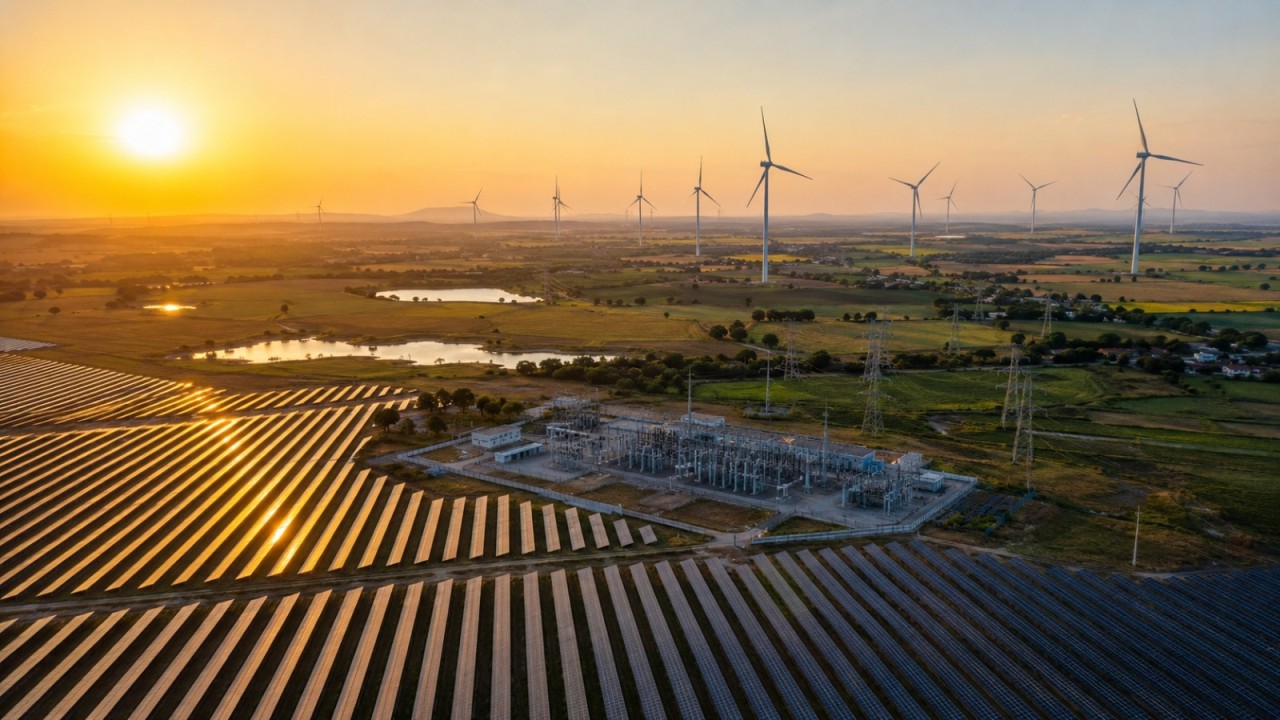
Beyond Capacity: Building India's Clean Energy Future
The next phase is not just capacity. It is a globally competitive clean energy ecosystem.
Union Budget 2026: Building Indias green capacity for the next decade
The Budget balances near-term macro stability with long-term green capacity for the next decade.

India goes Intercontinental with landmark EU trade deal
Exports are 22% of GDP. A landmark EU deal takes India from bilateral to intercontinental.
