

The Budget rightly allocates Rs 1.7 lakh crore to give a push to infrastructure development, targeting 9,000 km of economic corridor, more hospitals, highways, high-speed trains, airports and a National Logistics Policy.
Budget 2020-21: This years Union Budget came at a challenging time when the economy is in a slowdown, marked by subdued investor sentiments, lacklustre demand and rising unemployment. I must compliment the finance minister for responding with a well-thought out, holistic and visionary Budget it is one for the long haul and does not attempt any quick fixes.
While there is no big bang announcement that many were expecting, it does reflect continuity in policy and several small steps towards Mission $5 trillion. While the Budget focuses on reviving demand by leaving more money in the hands of consumers and businesses, there is also an overarching goal to ensure both ease of business for corporates and ease of living for the common man. Here are the key positives I see emerging from Budget 2020:
The FM must be complimented for avoiding a major deviation from the path of fiscal prudence. She has resisted the temptation to opt for an extravagant fiscal expansion and yet managed to deliver something positive for almost everyone farmers, urban middle class, corporates, including start-ups and youth true to the vision of Sabka Saath, Sabka Vikas.
There is a welcome focus on enhancing rural incomes realising the crucial role it is likely to play in boosting demand. The plans to set up more warehouses, introduction of dedicated trains and flights to speed up the farm to market journey for perishable products, incentives for horticulture and fisheries have tremendous potential to revitalise the rural economy.
The introduction of a new income tax regime that offers lower tax rates by foregoing exemptions will come as a major relief for the middle class and can potentially free up Rs 40,000 crore, which if translated into purchasing power, can help kick-start the economy. Overall, the government has shown a strong intent to simplify return filing the Tax Payers Charter should put an end to unnecessary harassment.
The Budget rightly allocates Rs 1.7 lakh crore to give a push to infrastructure development, targeting 9,000 km of economic corridor, more hospitals, highways, high-speed trains, airports and a National Logistics Policy. This should unleash a much-needed multiplier effect on the economy, resulting in more jobs, higher incomes, in turn generating demand which would crowd in private investment. Notably, the Budget invites the private sector to complement the governments efforts in nation-building as there is a big push towards PPPs in healthcare, agri-infra, and railways, among others.
A big positive is the Budgets focus on sustainable growth and climate change. Allocation of Rs 22,000 crore to the power and renewable energy sector, introduction of prepaid smart metering, encouraging farmers to use solar pumps and generate solar energy on barren land, and solar plants alongside railway tracks will inject greater momentum into the clean energy ecosystem. Allocation of `4,400 crore to incentivise plans to ensure clean air is also a welcome step. The Budget acknowledges the citizens need to access basic amenities and focuses on a wider healthcare network and a plan for 100 water-stressed districts as part of the Jal Jeevan Mission that looks at augmenting water resources.
Source: Financial Express
Read More
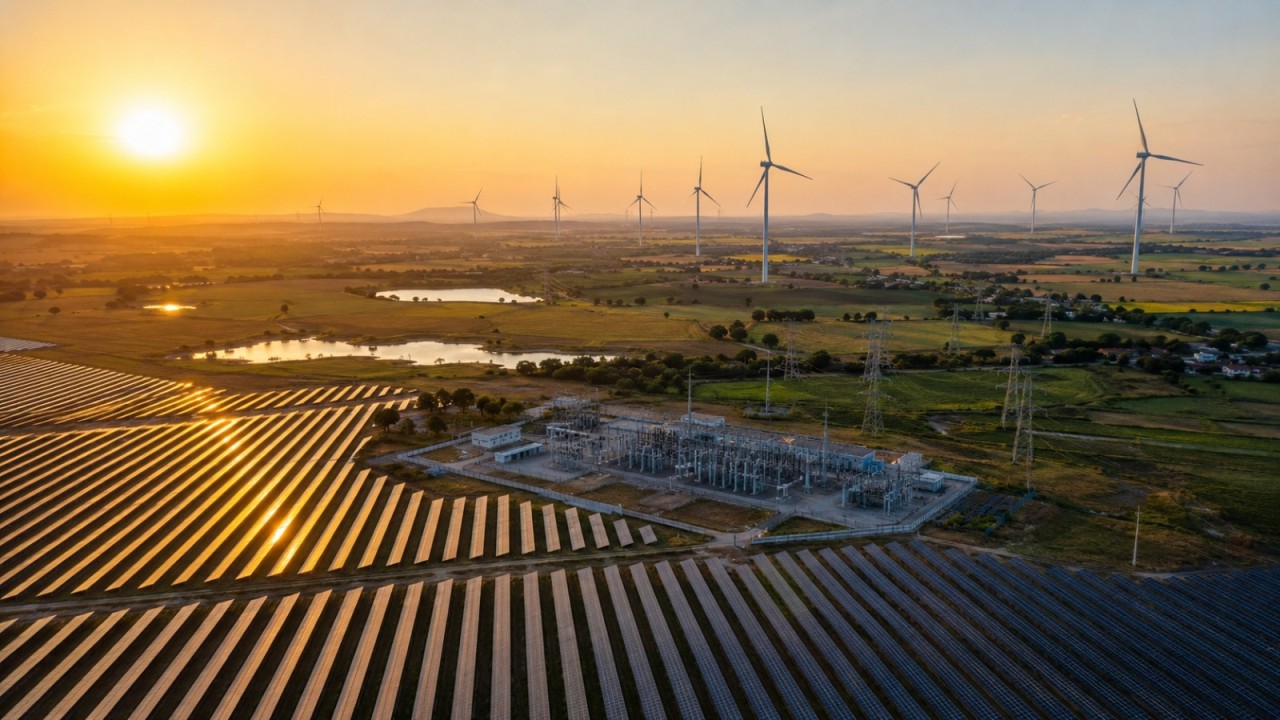
Beyond Capacity: Building India's Clean Energy Future
The next phase is not just capacity. It is a globally competitive clean energy ecosystem.

Union Budget 2026: Building Indias green capacity for the next decade
The Budget balances near-term macro stability with long-term green capacity for the next decade.

India goes Intercontinental with landmark EU trade deal
Exports are 22% of GDP. A landmark EU deal takes India from bilateral to intercontinental.
